The MITSUBA Group is committed to environmental conservation activities based on the MITSUBA Environmental Declaration. We have established and are promoting an environmental management system for the entire Group in accordance with the “MITSUBA Group Environmental Manual.” Each Group company reports on the results of its environmental management activities twice a year to the MITSUBA Head Office. In order to evaluate the effectiveness of the results, the MITSUBA Head Office periodically conducts “Environmental Visit Audits” to confirm the effectiveness and appropriateness of our environmental management system.
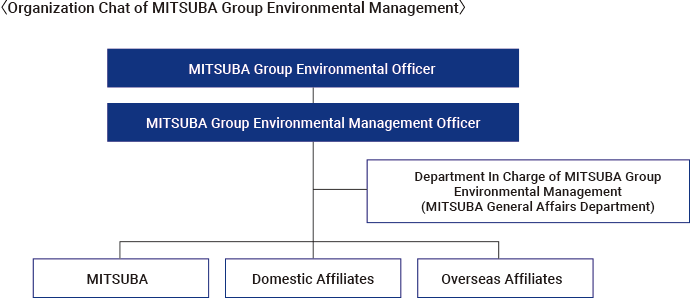
MITSUBA holds an "EMS Committee meeting" three times a year, which includes domestic group companies, to consider environmental issues and share information on environmental compliance and performance, thereby reducing environmental risks. The effectiveness and appropriateness of our initiatives are verified through an annual review conducted by the Representative Director (Executive Vice President), who serves as the company-wide Chief Environmental Officer. Matters with significant impact on management are resolved at the higher-level body, the ESG Committee.
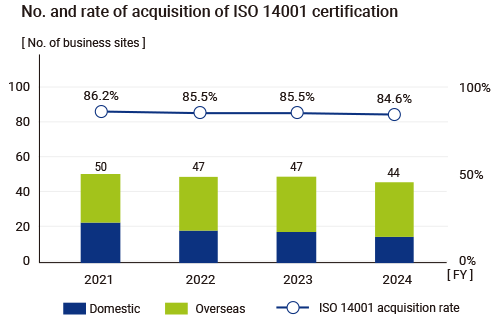
MITSUBA Group has established an environmental management system in accordance with ISO 14001:2015, covering its major affiliated companies. As of the end of March 2025, a total of 24 MITSUBA Group companies (6 domestic and 18 overseas) and 44 business sites (85% of business sites), mainly consisting of production sites, have acquired ISO 14001 certification. We have published the “MITSUBA Group Green Procurement Guideline” (*) to our suppliers and are encouraging them to acquire certification such as ISO 14001 and other certifications, as we work to preserve the environment throughout the entire supply chain.
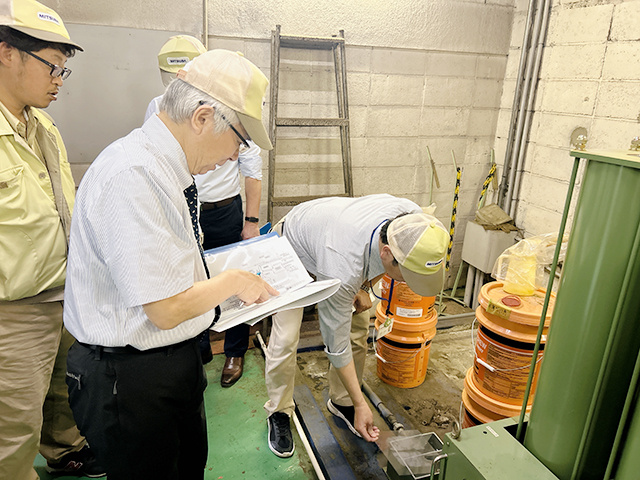
ISO 14001 External Audit
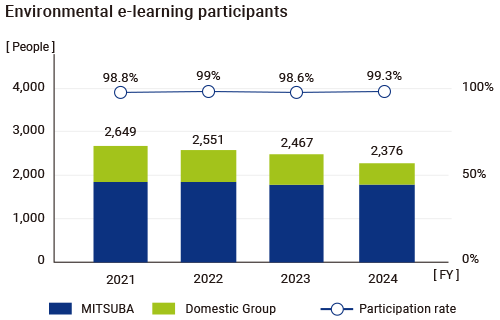
Restoring a polluted natural environment to a healthy condition takes a lot of time and money. Therefore, to foster a sense of responsibility for environmental conservation, we provide basic e-learning courses to all employees of the MITSUBA Group in Japan. Moreover, we are working to comply with laws and regulations and prevent risks by providing rank-based education and environmental education specific to each business site and workplace.
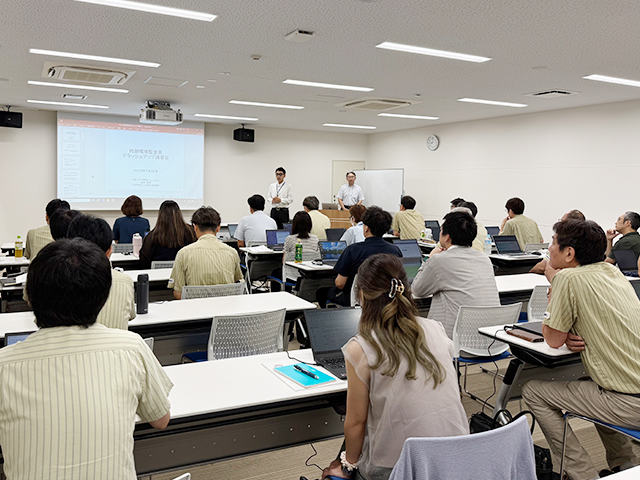
Scene from the training session
MITSUBA conducts an internal environment audit every year at all business locations to confirm the compliance with laws and regulations and that the PDCA cycle of its environmental management system is functioning properly and effectively. During audits, we set priority audit items in consideration of past audit results and changes in
environmental issues, such as environmental risks.
Moreover, we regularly hold training sessions for internal environmental auditors to acquire in-house qualifications, as well as brush-up training for qualified personnel.
To comply with Chinese environmental protection regulations, MITSUBA Electric (Dalian) installed two exhaust gas treatment equipment at its first and third plants in 2022. This initiative aims to reduce volatile organic compound (VOC) emissions, keeping atmospheric emissions below the standard of 1 ton per year. Burning the exhaust gas at high temperatures after filtering out VOC substances consumes a significant amount of electric power. However, by optimizing the equipment's programming, we can reduce both the operating time and electric power consumption while ensuring safety and compliance with environmental laws and regulations.
Moreover, at the First Plant, domestic wastewater is treated using AO activated sludge, coagulation and sedimentation, and sand filtration processes. In 2023, we refined the dosage of chemicals and the timing of their administration to enhance the purification process. We conduct daily monitoring to ensure optimal wastewater treatment management while adhering to wastewater treatment standards.
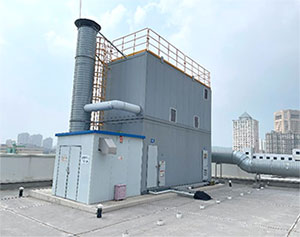
VOC Treatment Equipment
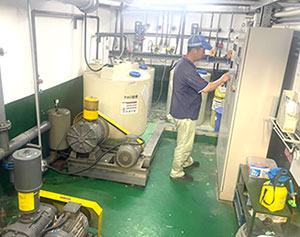
Wastewater Treatment Management Room
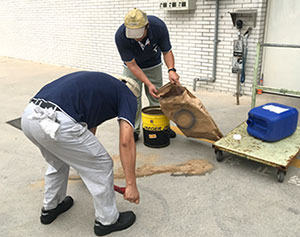
Training for Response to Chemical Spill
MITSUBA Group has incorporated the identified materiality (priority issues) into the “Environmental Function Policy” in its Medium-term Management Plan, and is working to reduce CO2 emissions and strengthen the environmental management system. By actively promoting the activities of the Carbon Neutrality Committee, the MITSUBA Group has significantly reduced its absolute CO2 emissions by 13.2% compared to FY 2018.
| Key Initiatives | FY2024 | FY2025 | ||
|---|---|---|---|---|
| Target | Achievement | Evaluation | Goal | |
| Reducing CO2 emissions | Group's absolute CO2 emissions: Compared to FY 2018 | ○ | Plan and promote measures to reduce emissions by 12.0% | |
| Plan and promote measures to reduce emissions by 9.0% | Completed planning for 13.2% reduction (Actual reduction rate: 12.4%) |
|||
| Conserving sustainable resource | Group waste recycling rate: 90% or higher |
96.4% | ○ | 90% or higher |
| Group total water withdrawal 1,385 ML or less |
1,148ML | ○ | 1,376ML or less | |
| Preventing air pollution | Plating facility exhaust gas concentration: Hydrogen chloride: 80 mg / ㎥ N or less Chlorine: 30 mg / ㎥ N or less |
Undetected | ○ | Hydrogen chloride: 80 mg / ㎥ N or less Chlorine: 30 mg / ㎥ N or less |
| NOx, SOx emissions: 40% reduction | 47% | ○ | Maintain 47% | |
| Reducing risk by operating EMS | Zero serious violations | No serious environmental pollution, accidents, or violation of laws and regulations | ○ | Zero serious violations |
| Complying with restrictions on Substance of Concern (SOC) | Zero serious violations | No serious violations of laws | ○ | Zero serious violations |
| Evaluation of management system according to industry standards: | ○ | Maintain 3.5 points or higher | ||
| 3.5 points or higher | 4.02 points | ○ | ||
| Contributing to biodiversity | Implementation rate of environmental volunteer activities: | ○ | 100% | |
| 100% | 100% | ○ | ||
Evaluation criteria (○: 100%, △: 80% or higher, lower than 100%)

 Search
