- We will make MITSUBA the brand of choice on a global scale -
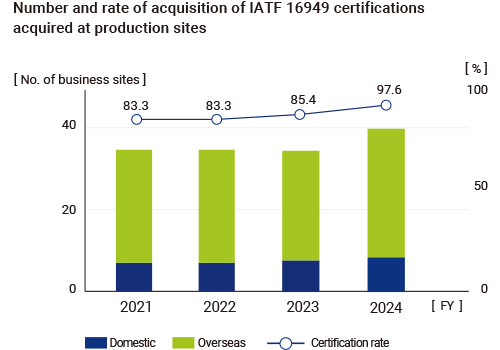
MITSUBA has built and operates a quality management system that complies with the international standard IATF 16949 for the automobile industry. We are working to continuously provide products that meet the needs of our customers and comply with laws and regulations in each country.
We have acquired and maintained IATF 16949 certification at our production sites, including overseas and domestic group sites, and we are promoting continuous improvement of our quality management system.
Audit
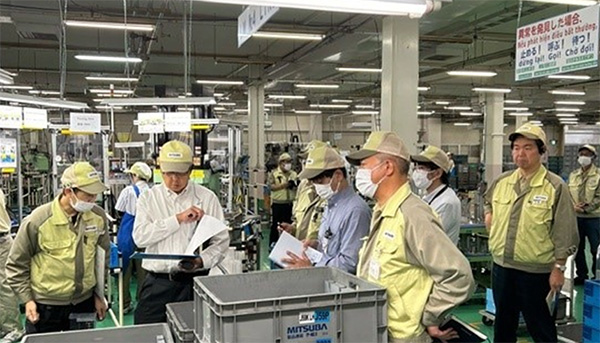
As part of our internal quality control, we conduct yearly “internal quality audits” at each business site to check whether processes are functioning properly, and improve our systems through management reviews. Furthermore, in order to strengthen control across the entire Group, MITSUBA Head Office audits the quality assurance systems of both overseas and domestic group companies and works to standardize the operation of MITSUBA’s quality management system. Moreover, we conduct quality compliance audits yearly to check whether on-site inspections are being carried out properly in accordance with the rules, and whether any irregularities such as data tampering have occurred, by checking the actual site and the actual items.
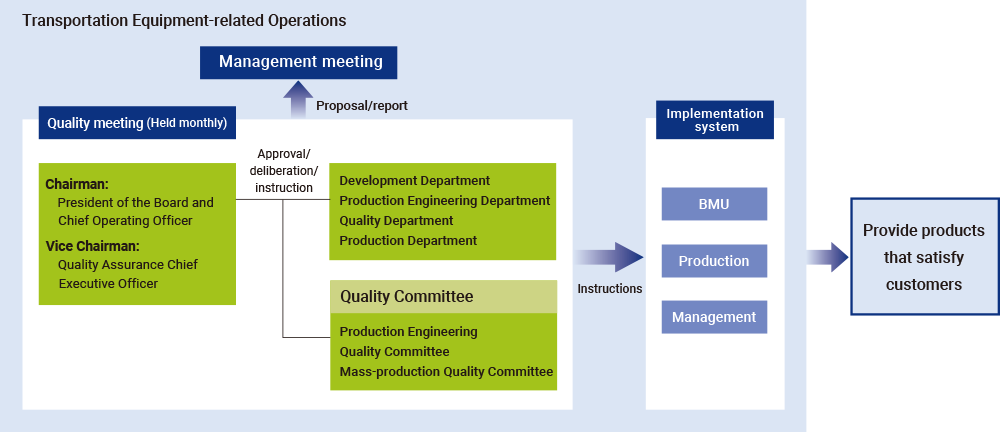
MITSUBA evaluates the appropriateness, adequacy, and effectiveness of its quality management system, monitors progress on quality concerns, and offers improvement instructions at quality meetings led by the President and Representative Director.
Moreover, we have formed quality committees for each function, such as production technology and production departments, to design systematic quality improvement strategies with the aim of increasing quality levels and optimizing global quality costs.
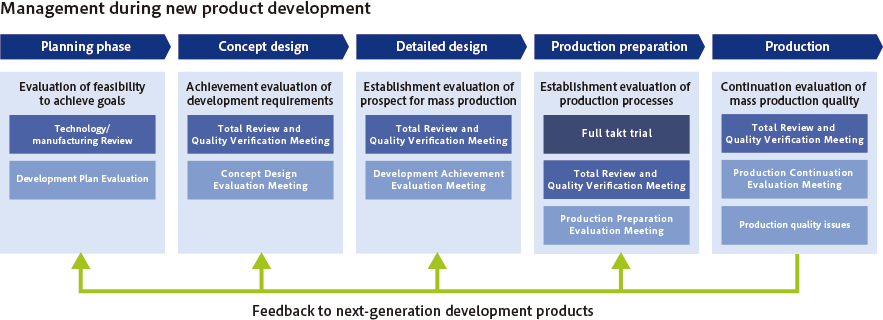
Based on our product development flow, MITSUBA holds quality verification meetings at each stage from development planning to design and production. At these meetings, we evaluate product safety and conformity with quality regulations. In quality assurance activities prior to mass production, we hold production trials (full takt trials) equivalent to mass production in order to evaluate fluctuations in quality and to prevent the recurrence of the quality issues.
In case a quality defect occurs, we register it in the MITSUBA Group's quality information system, and if necessary, countermeasures shall be laterally spread with other production sites to prevent the quality defects from spreading to customers. Thereafter, we implement initiatives aimed at preventing recurrence, and the results are reported and discussed at quality meetings, etc., leading to the prevention of similar defects from occurring again.
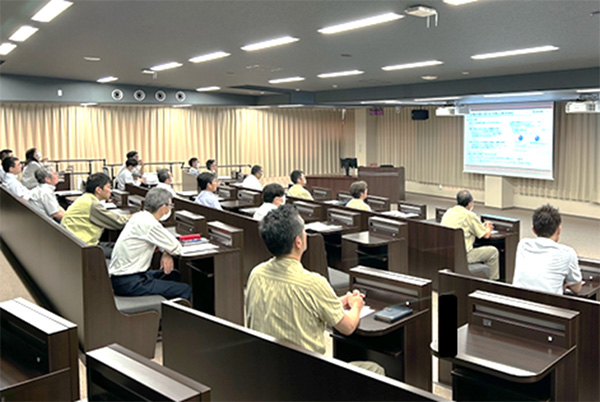
Quality Culture Training
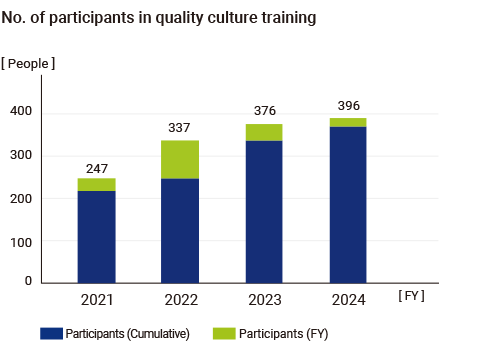
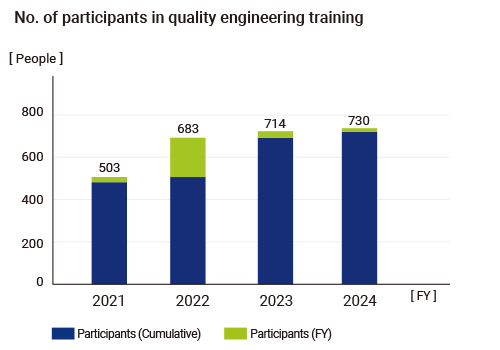
MITSUBA's quality education systematically develops human resources through stratified education and specialized education. For stratified education, we have conducted education for managers that fosters a culture of quality. We are also working to build management that places utmost priority on quality. We also strive to improve quality awareness by learning lessons from problems in the past and providing feedback to product development to ensure the safety of new products.
For specialized education, in order to establish highly durable designs (including changes in the operating environment and changes overtime) and processes which make manufacturing easier, we are conducting quality engineering education and working on concurrent development (*) that combines simulation and quality engineering.
(*) Concurrent development: A method that shortens the development process by simultaneously promoting upstream processes such as planning and design and downstream processes such as manufacturing and testing, and by optimizing designs and processes at the initial stage of development.
Since related departments gather and communicate among them, mutual losses due to miscommunication can be avoided.
At MITSUBA, we are engaged in “MEE activities” based on QC circle activities. MEE activities have a history of more than 55 years since their introduction, with the aim of improving skills and self-actualization through group activities, creating a bright, energetic and fulfilling workplace, and improving customer satisfaction. These activities are being expanded widely, including domestic and overseas MITSUBA Group companies. Improvement cases are selected from the companies and reported at MEE Conference regularly.
In 2025, 9 groups from Japan and 14 groups from overseas participated and shared improvement cases.
We will continue our quality improvement activities in the future to further improve quality.
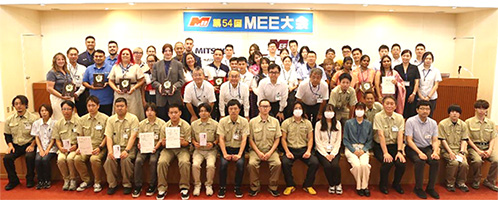
MEE Conference Participants
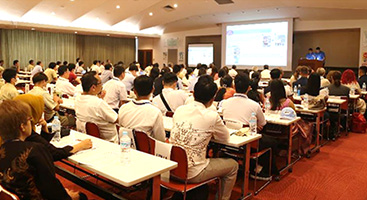
MEE Conference
In order for MITSUBA to continue to be chosen by customers, the cooperation of our suppliers who provide us with the components and materials for our products is essential. MITSUBA issues quality control standards based on the international standard IATF 16949 for the automotive industry to all of its suppliers, and requires them to comply with these standards. Furthermore, we are working closely with our suppliers to establish quality assurance system, and provide ongoing support in order to enhance the quality assurance systems of our suppliers.

 Search